

136. Practice, Improvisation, and the Value of Bad Drawings
What if we change the terms of the deal?

I was drawing pictures of Sonny Rollins and other jazz musicians, some of which ended up in this post last week. I was working from videos of these guys playing (which I could pause, a luxury you don’t have when you’re sketching live. Then again, in a live performance, the camera doesn’t maddeningly swerve away from the musician you’re in the middle of drawing).
It’s fun to draw musicians because they don’t exactly stand still, but they do return to basically the same pose over and over. And I also love the postures they get into with their instruments. The stand-up bass players, as you’ll see below, tend to sort of hug their instruments, or lean over them in an interesting way.
But my first few drawings were awful! It was like I’d never drawn before! I kept thinking, “what is WRONG with me?”
Then I thought, “what if I changed the rules of this? What if the rule was that you have to make ten terrible drawings of musicians before you get a good one?”
At that point, I happily sat down and started making terrible drawings of musicians.
And of course, if it’s not obvious already, they weren’t terrible—they were warm-ups. They were preliminary. They were figuring-it-out drawings.
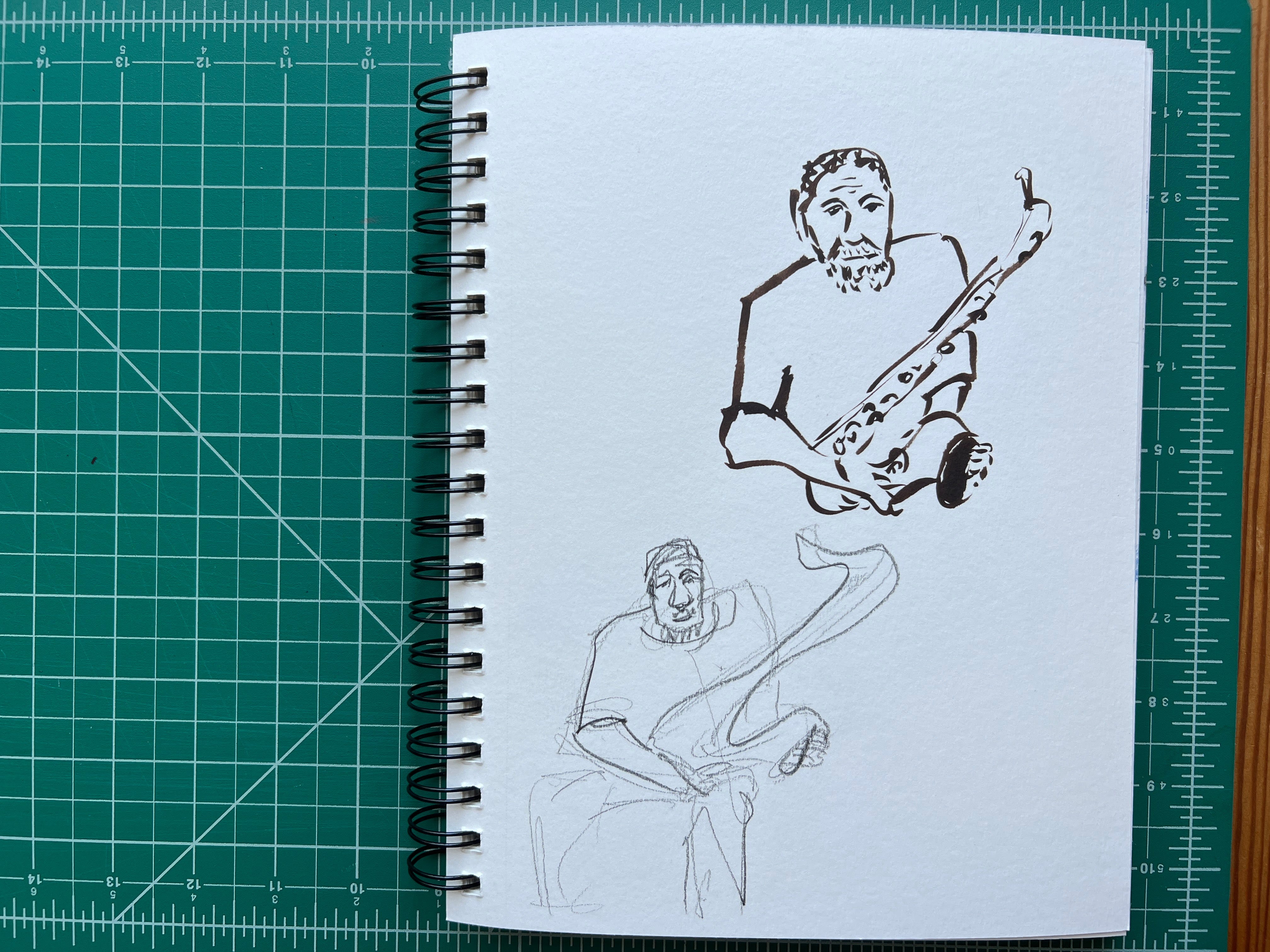
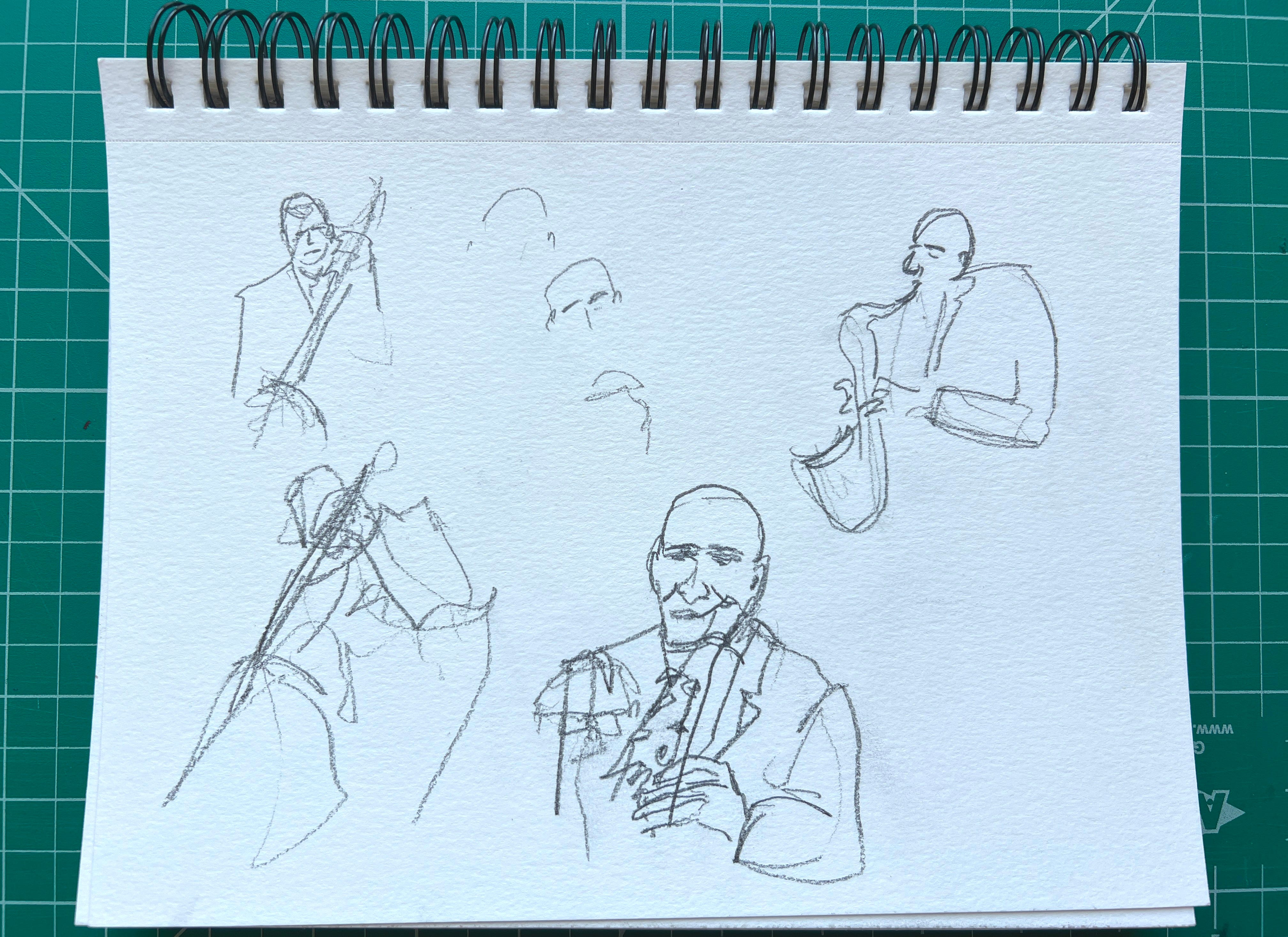
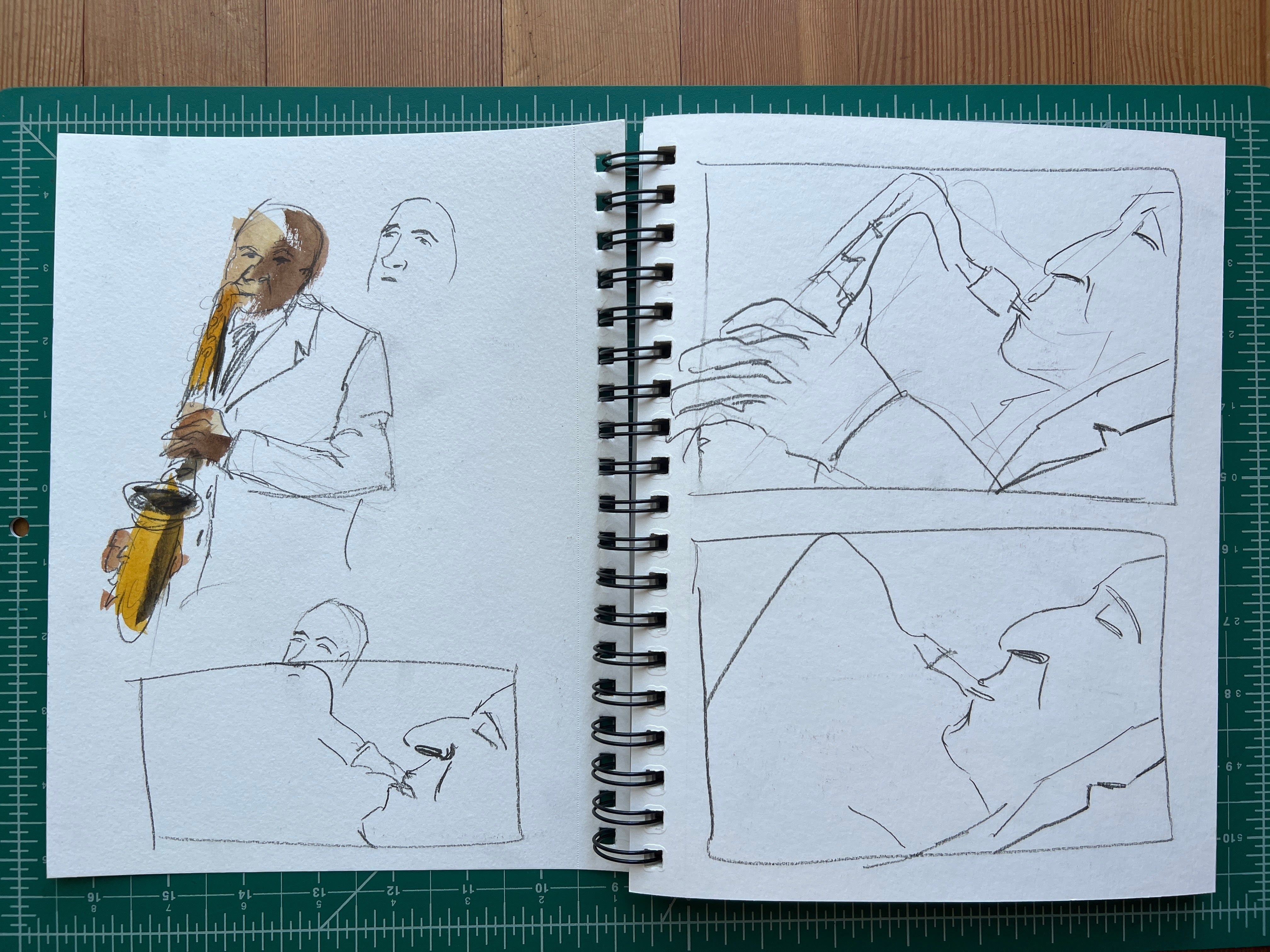
So for me, this is about setting expectations. Here’s a story I think about a lot:
I once had a job at an affordable housing agency. At one point, I was put in charge of all the admin work associated with this new housing development we were building. There were several streams of government funding coming into this project, plus bank financing, all with complicated requirements. It was my job to keep track of the paperwork, the requirements, the deadlines—all the desk work necessary to keep the money moving.
And it really was paperwork, that’s how long ago this was.
The woman who handed this job over to me told me this: “People are going to ask you for the same pieces of paper over and over again. Your job is to send it to them every time they ask. You’ll figure out pretty quick what it is people keep asking for. Just keep them all on your desk and go stick one in the fax machine every time they ask.”
And that’s exactly what happened. Over and over, these highly paid attorneys and bankers would ask me for a copy of the same board resolution or certificate of something-or-other that I’d already sent them twice.
I could’ve gotten irritated at that, and icily reminded them that I sent to them last Tuesday. But I didn’t, because somebody told me at the onset that this is how it works, and that my job is to send this stuff every time people ask for it.
She managed my expectations. And I did the job comfortably and easily, and congratulated myself on being good at it.
So what if that’s how drawing pictures works? What if we all did this instead:
